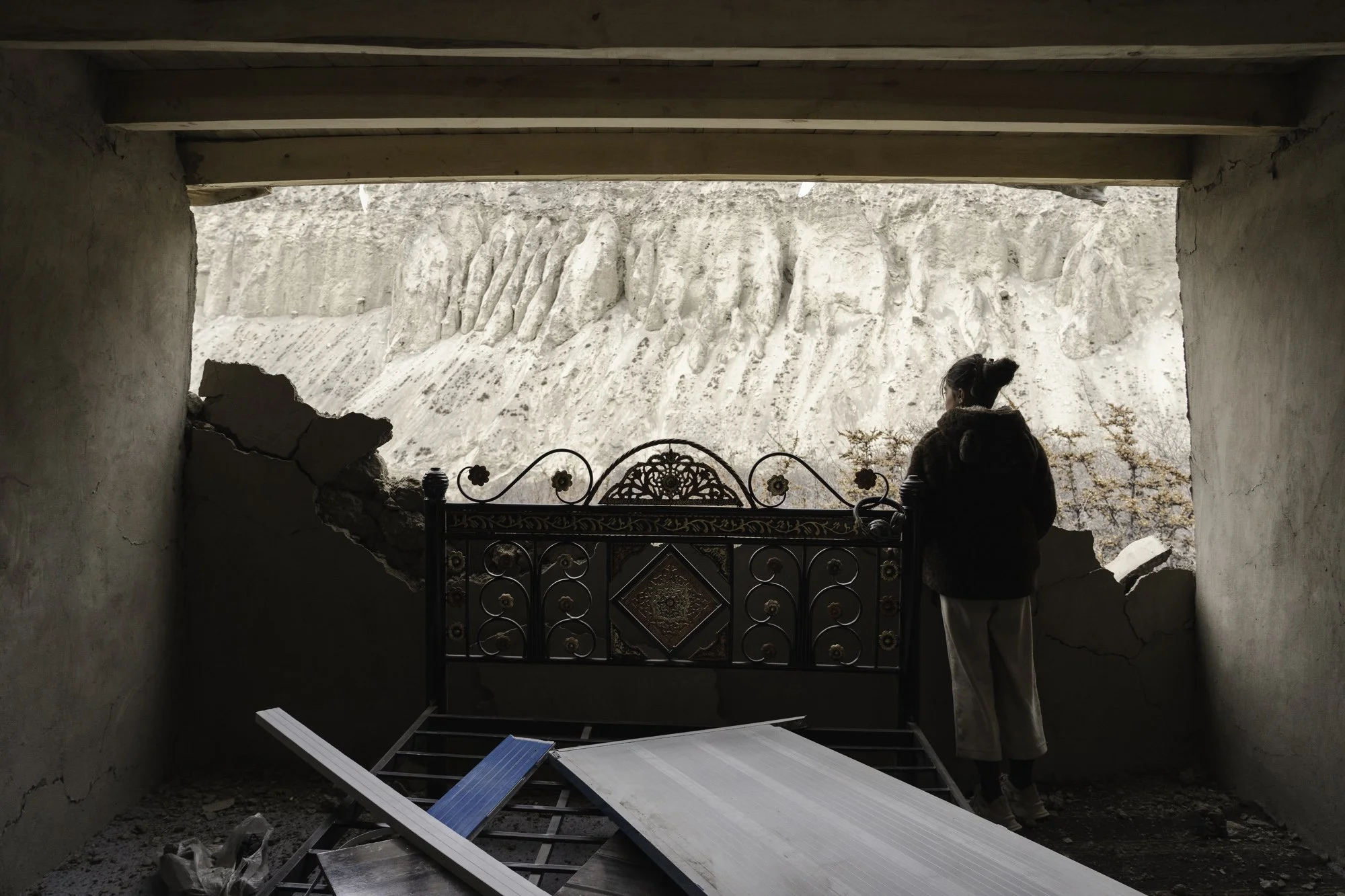
THEY HEARD IT COMING
Chapursan valley sits at the end of a single unpaved road in the far north of Pakistan, against the Afghan border. On 19 January 2026 a shallow magnitude 5.6–5.8 earthquake struck beneath it. Around 600 homes were damaged, some 300 of them beyond repair, and close to 90% of the valley’s residents spent the winter in tents in temperatures reaching −25°C.
The Geological Survey of Pakistan classifies what is happening here as an earthquake swarm — a prolonged sequence of tremors in one small area, with no main shock and no way of knowing when it will end.
The Survey is also examining the role of ice. Glaciers are shifting along the fault line, and permafrost that has bound these slopes for centuries is beginning to thaw. As the range warms, its ground is growing harder to read.
Leaving is not simple either. Families who move downstream arrive without land, herds or work, and the skills that sustain a household at three thousand metres are worth little in the towns below.
“A house here is not just walls and a roof,” said Alam Jan, a resident of Zood Khun village. “It carries our culture. The whole community builds it.”
A small number of travellers reached Chapursan each year, drawn by its remoteness, its trekking routes and the shrine at Baba Ghundi. That has stopped.
Landslides have repeatedly severed the single road, and the houses that received visitors are damaged or gone.
For now, the valley is cut off, and it is not safe to visit.