
FAITH IN TRANSITION
In the remote valleys of northern Pakistan, the indigenous Kalash community have long sustained a distinct culture and spiritual tradition rooted in animism while living within a predominantly Muslim society. But for a growing generation of Kalash women, opportunity increasingly lies beyond the mountains. Education offers a path forward, but it also takes them into a society where their upbringing, beliefs, and identity can be questioned, and where the pressures of social change and religious conversion are increasingly felt.
This project has been awarded:
Group exhibition in Nontron, France 2026
Winner of Gentex Corp Personal Safety Award 2025
Awarded “Highly commended” in Ian Parry Photojournalist Grant 2025
Nominated for invitation to UNICEF Photo of the Year 2025
Award of Excellence in the The Alexia/CPOY Project Grant 2025
Group exhibition with Magnum Photo in Paris 2025
Hamburg portfolio review - The 100 selected photographers 2025
Finalist for Joan Wakelin Bursary 2025
Shortlisted for Prix Révélation SAIF x La Kabine 2025
After celebrating Chawmos with her family in the Kalash valleys, Zarmina rests on her bed, reflecting on the future that awaits her at University of Peshawar. Tomorrow she leaves for peshawar to study. “I want to study something that can benefit my community,” she says
Among them are Zarmina, Farzana, and Karina: three young women who have left the Kalash valleys to pursue education in Pakistani cities. With a population of around 4,000 and only one elementary school for Kalash children, education becomes an early rite of passage, one that increasingly takes place far from their ancestral valleys. For Kalash women in particular, the decision to pursue education carries a distinct weight. It offers access to independence and opportunity, but also places them in environments where expectations around behavior, dress, and belief stand in stark contrast to their upbringing in the Kalash tradition.
“When I was younger, I started rejecting being Kalash, because all my life, I had been told it would be better if I converted. - Karina
My abayas are ironed for tomorrows retun to Peshawar University
- Zarmina
Karina, Zarmina and Farzana’s path reveals a shared condition: education opens doors that lead away from the valleys, into a social and religious framework where belonging is defined differently, and where pressure to assimilate is both subtle and explicit.
Zarmina is cooking with her cousin Sajima in their rented apartment in Peshawar. Here she lives with 5 of her cousins from Kalash.
“After 5 years here, i started telling people i was Kalash, before that i was afraid of the discrimination. But now i am confident, cause i have matured” - Sajima
“In Pakistan i never hope, i am afraid for future generations of Kalash, as it’s getting more expensive to study. We only have Kalasha Dur, which is the only school that teaches the Kalasha language. So if you can’t attend that school, you have to study outside, as Zarmina does. But i don’t like the abaya, cause i am Kalash, and so is Zarmina, but in Pakistan, we cannot wear what we want. But i am proud of her, and i hope she will be well educated”
- Baras Khan: Zarminas Father
For some, that pressure culminates in conversion to Islam: an outcome that is neither abrupt nor accidental, but shaped over time. Within the Kalash community, conversion marks a definitive break: once made, the choice cannot be reversed. There is no path back into the faith they were born into, no ritual of return. Not all will cross that line, but its presence shapes the decisions of all who leave.
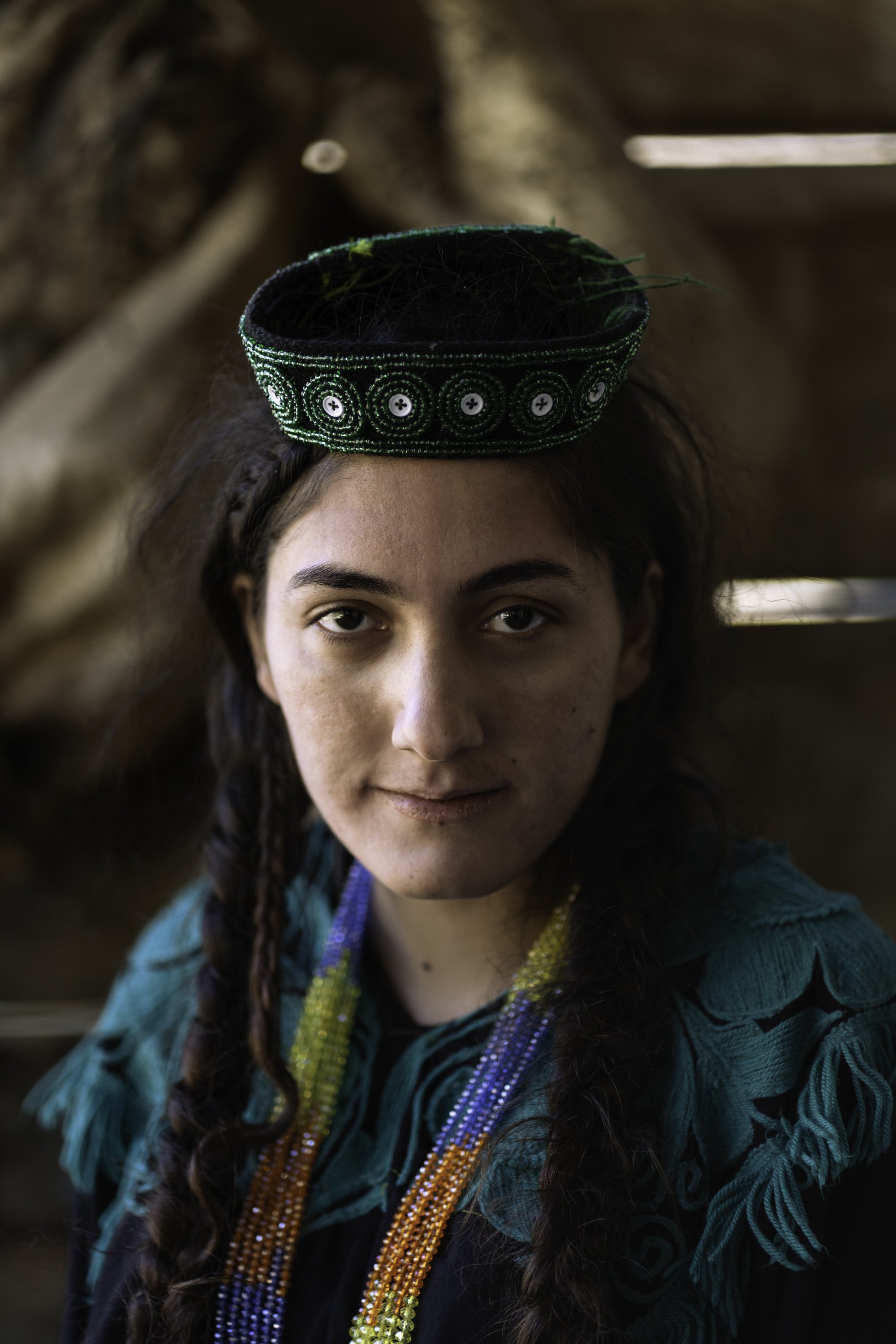
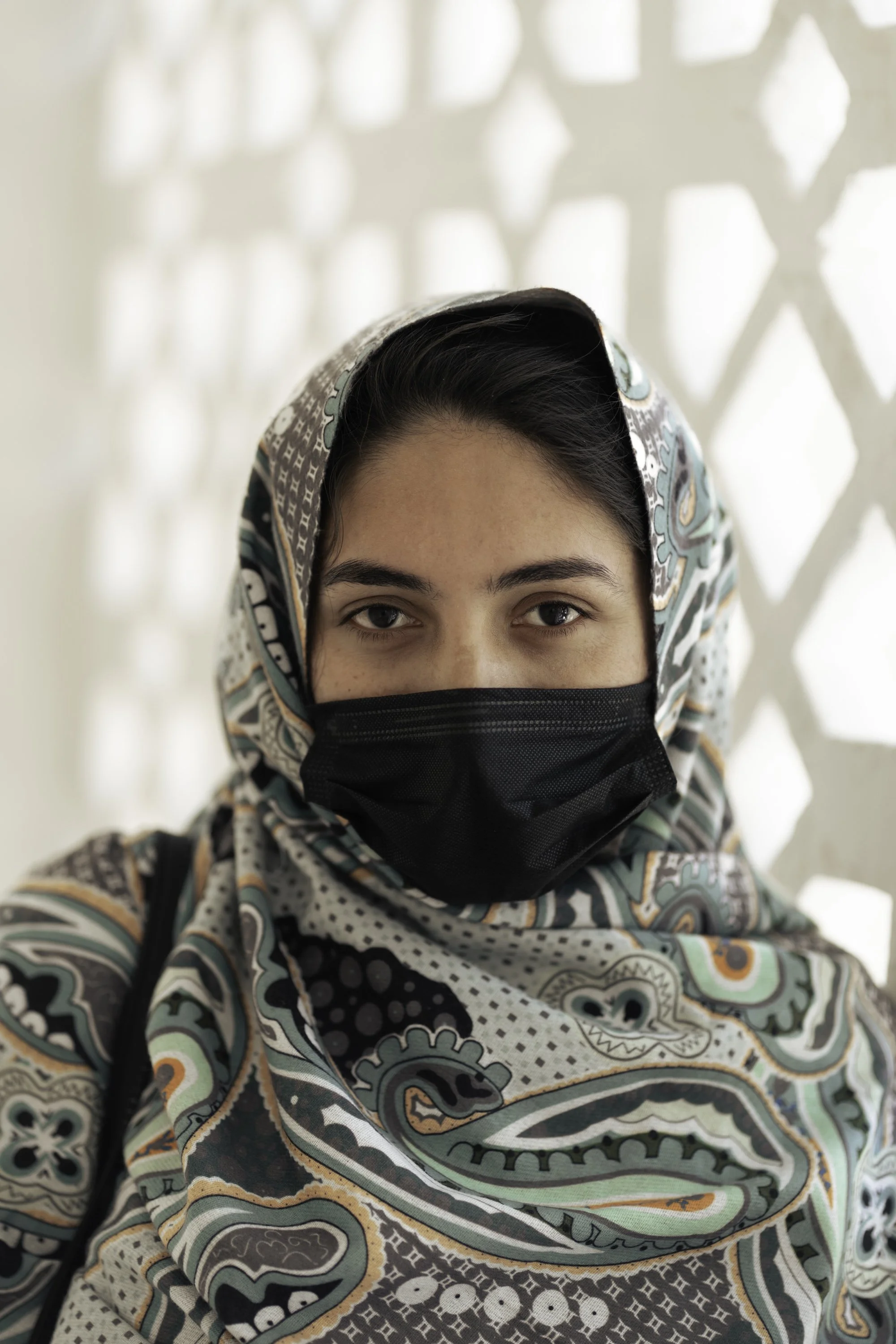
“ In my 2.5 years at university, i never told anyone i am Kalash”
Farzana, 21 years old, born in the Kalash Valley, taking her bachelor's in Peshawar
Karina’s girls hostel in Chitral City, where she lives with 3 other girls from northern Pakistan, all attending highschool
“In our Kalash valleys, Kalasha girls only study islamiat, they dont even study their own culture. So this is also why they chose islam, chose to convert. We only have one school, Kalasa dur, that teaches us about our own religion. I didn’t attend.”
-Karina
The current body of work traces this condition through the experiences of Zarmina, Farzana, and Karina, as it asks how education ultimately transforms belonging, and what is gained, redefined, or lost in the process.